The Mystery of the Nazca Lines
— July 27, 2026In the arid coastal desert of southern Peru, hundreds of massive drawings stretch across…

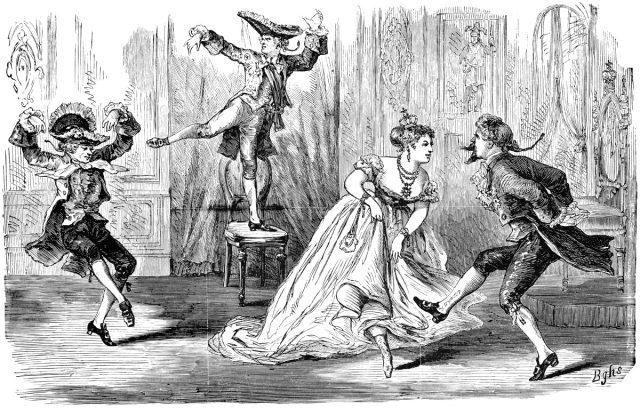
In the sweltering summer of 1518, the streets of Strasbourg—then a prosperous free city in the Holy Roman Empire—transformed into a nightmarish open-air ballroom. It began innocently enough, or so it seemed. On July 14, a woman known only as Frau Troffea stepped out of her half-timbered home and began to dance. There was no music, no celebration, no apparent joy. She twisted, twirled, and jerked with wild abandon, her feet pounding the cobblestones hour after hour. She danced through the night, collapsed from exhaustion, then rose and danced again. For six straight days she continued, her body drenched in sweat, her eyes vacant, her swollen feet bleeding into her shoes. Neighbors watched in horror as the spectacle spread like wildfire. Within a week, more than 30 others had joined her. By August, the “dancing plague” had consumed as many as 400 men, women, and children. Some sources claim dozens died from heart attacks, strokes, or sheer exhaustion—at one point, up to 15 fatalities a day. The city was in panic. What force could compel an entire community to dance itself toward death?
The victims’ movements were grotesque rather than graceful. Chroniclers described spasmodic convulsions, violent thrashing of arms, and cries for help that went unanswered. Many refused food or water, collapsing only when their bodies could no longer obey the compulsion. Blood pooled in their feet; some bled through their shoes. The affliction showed no respect for age or status—rich and poor, young and old, all were swept up. Physicians of the day, steeped in humoral theory, diagnosed “overheated blood” as the culprit and prescribed a counterintuitive cure: more dancing. City officials, desperate to contain the chaos, cleared guildhalls, hired musicians, and even brought in professional dancers to keep the afflicted moving. They believed the mania would burn itself out if given space and rhythm. Instead, the “treatment” turned a local oddity into a full-blown epidemic, with dancers now performing in public squares under official supervision. The decision only fueled the contagion.
Religious authorities offered a different explanation. Many believed the plague was a curse from Saint Vitus, the patron saint of dancers and epileptics. Failing to honor him, locals feared, could trigger a vengeful compulsion to dance until death. In response, the city council eventually loaded the worst cases onto wagons and carted them to a shrine dedicated to the saint in the nearby town of Saverne. There, priests performed exorcisms and healing rituals. By early September, as mysteriously as it had begun, the dancing stopped. The survivors returned home, some limping on bandaged feet, others forever changed. The exact death toll remains debated—primary municipal records mention no mass fatalities, while later chronicles speak of dozens—but the psychological scars on Strasbourg were undeniable.
To understand why this happened, we must step into the world of 16th-century Strasbourg. The previous decade had been brutal. Repeated crop failures, devastating floods along the Rhine, and outbreaks of smallpox and syphilis left the population malnourished and terrified. Poverty was rampant; the gap between rich merchants and struggling peasants yawned wider than ever. Superstition filled the void left by limited medical knowledge. Dancing manias were not entirely new—similar outbreaks had struck Europe in 1374 and sporadically since—but 1518’s event was the best-documented and most devastating. Eyewitness accounts from physicians, priests, and city council minutes survive, painting a vivid picture of collective terror.
Modern historians and scientists have proposed several theories. One popular culprit is ergot poisoning. The fungus Claviceps purpurea grows on damp rye—the staple grain of the poor—and produces alkaloids similar to LSD. Ingesting contaminated bread could cause convulsions, hallucinations, and muscle spasms. Yet medical historian John Waller, author of A Time to Dance, a Time to Die, dismantles this idea. Ergotism typically constricts blood vessels so severely that victims suffer gangrene and agonizing pain, making sustained dancing physically impossible. Waller’s preferred explanation is mass psychogenic illness, also known as mass hysteria. Under extreme stress, groups can unconsciously manifest shared physical symptoms without any organic cause. In Strasbourg, the local belief in Saint Vitus’s curse provided the perfect cultural template: fear of divine punishment literally moved people to dance. Suggestion spread rapidly—seeing one person dance triggered others to mimic the behavior in a classic case of psychic contagion. Similar episodes have occurred throughout history, from medieval nunneries to modern outbreaks of twitching or fainting in schools.
The dancing plague of 1518 offers more than a bizarre historical footnote. It reveals how psychological stress, cultural beliefs, and social pressure can produce physical symptoms that feel utterly real to those experiencing them. Today, we recognize parallels in “TikTok tics” among teenagers or fainting spells during rock concerts—harmless in isolation but capable of sweeping through communities. No single cause fully explains the 1518 event, but the stress-induced hysteria theory best fits the evidence: no contaminated bread could have selectively afflicted only the psychologically primed, and no pathogen spread with such precision.
In the end, the plague faded with the summer heat. Strasbourg rebuilt, and the dancers recovered. Yet the episode remains a haunting reminder of human vulnerability. In an era of pandemics, economic anxiety, and digital echo chambers, the dancing plague warns us that the mind can be its own worst enemy. Sometimes the most dangerous epidemics aren’t carried by viruses or fungi—they begin in the collective imagination and dance their way into reality.
In the arid coastal desert of southern Peru, hundreds of massive drawings stretch across…
In early December 1952, London was gripped by one of the most severe air…
Among the many strange stories to emerge from the horrors of World War I,…