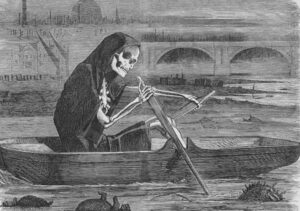
When London Could No Longer Hold Its Nose: The Great Stink of 1858
— July 15, 2026In the summer of 1858, the heart of the British Empire found itself overwhelmed…

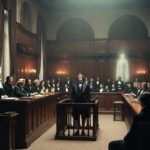
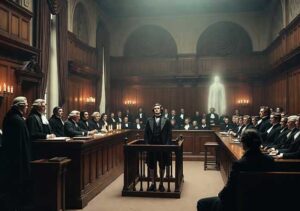
In the dead of winter 897, inside Rome’s Basilica of St. John Lateran, one of the strangest spectacles in papal history unfolded. A rotting corpse, nine months buried, was dressed in full papal regalia, propped upright on a throne, and placed on trial. The judge? The sitting pope. The defendant? His predecessor, dead and decomposing. Welcome to the Cadaver Synod, also known as the Synodus Horrenda—the “Horrifying Synod.”
The accused was Pope Formosus, who had reigned from 891 to 896. A seasoned diplomat and bishop of Porto, Formosus had navigated the violent politics of 9th-century Italy, where rival factions from Spoleto and the East Franks fought for control of the papacy and the imperial crown. In 896, he crowned Arnulf of Carinthia as Holy Roman Emperor, a direct slap at the powerful Spoleto family. When Formosus died suddenly in April 896, his brief successor Boniface VI lasted only 15 days. Then came Stephen VI, a Spoleto-backed cleric who owed his position to the very faction Formosus had opposed.
Stephen wasted no time settling scores. In January 897, he ordered Formosus’s body exhumed from St. Peter’s. The corpse—blackened, bloated, and reeking—was clothed in pontifical robes, fitted with a miter, and seated on the papal throne. A deacon stood beside it to “speak” on the dead pope’s behalf. Stephen VI himself led the prosecution, shouting accusations across the hall while the Roman clergy watched in stunned silence. The charges were familiar political hit pieces: perjury, violating canon law by transferring from one diocese to the papacy, and illegally holding multiple bishoprics at once. Formosus, of course, offered no defense.
The verdict was a foregone conclusion. Guilty. Stephen declared Formosus’s entire papacy null and void. All his ordinations—hundreds of priests and bishops—were annulled. The corpse was stripped of its sacred vestments. Three fingers of its right hand, used for blessings and consecrations, were hacked off. Dressed now as a lowly layman, the body was dumped unceremoniously into the Tiber River.
The grotesque theater backfired spectacularly. Romans were horrified. Riots erupted. Months later, Stephen VI was deposed, imprisoned, and strangled to death in his cell. The next pope, Theodore II, quickly reversed the synod’s decisions, reinstated Formosus’s ordinations, and gave the retrieved corpse an honorable reburial in St. Peter’s. Subsequent popes formally condemned the Cadaver Synod and forbade any future trials of the dead.
The event remains a low point in the so-called “Dark Age” of the papacy, when noble families treated the Chair of St. Peter like a political prize. Yet it endures in popular memory not for its theology but for its sheer macabre absurdity: a pope so consumed by hatred that he dragged a corpse from the grave to scream at it in open court. In an age of intrigue and vendettas, the Cadaver Synod stands as the ultimate symbol of how power, once seized, can drive even the highest office into madness.
In the summer of 1858, the heart of the British Empire found itself overwhelmed…
Some of history’s deadliest natural disasters have come without warning, leaving behind little visible…
Few criminal cases in British history are as bizarre as the Hammersmith Ghost Murder….