When London Could No Longer Hold Its Nose: The Great Stink of 1858
— July 15, 2026In the summer of 1858, the heart of the British Empire found itself overwhelmed…

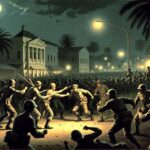
On October 17, 1814, a quiet Monday afternoon in the crowded slums of St Giles turned deadly when a massive wave of beer crashed through the streets of London. What began as a routine day at the Meux & Co Horse Shoe Brewery on Tottenham Court Road ended in one of history’s strangest disasters. A giant wooden vat of fermenting porter suddenly burst, unleashing between 128,000 and 323,000 imperial gallons of dark ale in a 15-foot-high torrent. The Great London Beer Flood claimed eight lives, destroyed homes, and left a lingering stench for months, yet it was later ruled an unavoidable act of God.
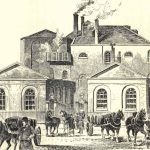
The brewery stood in a poor, overcrowded district known for its Irish immigrant community and makeshift cellars. Its storage area housed enormous vats, some three stories tall and reinforced with heavy iron hoops. One such vessel, 22 feet high and filled nearly to the brim with ten-month-old porter, had been a point of quiet concern earlier that day. Around 4:30 p.m., storehouse clerk George Crick noticed that one of the 700-pound iron bands encircling the vat had slipped off. Such failures happened occasionally, so his supervisor instructed him simply to note the issue for later repair. No immediate action was taken.
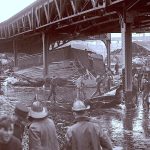
Just over an hour later, at about 5:30 p.m., the vat ruptured with explosive force. The pressure from the hot, fermenting liquid shattered the wooden staves and sent a roaring flood surging outward. It dislodged the valve on a neighboring vat and smashed several other large barrels, triggering a chain reaction. The back wall of the brewery collapsed, and the deluge poured into New Street, a narrow cul-de-sac behind the facility. Residents described a sudden, thundering wave that swept away everything in its path, flooding basements and ground-floor rooms up to waist height or higher.
Tragedy struck hardest among women and children, as many men were away at work. In one house on New Street, 14-year-old Eleanor Cooper and her mother Mary Mulvaney were taking tea when the beer rushed in; both perished, along with Mary’s three-year-old son Thomas. Nearby, five mourners attending a wake for a two-year-old boy in a cellar drowned when the flood filled the room. Other victims included four-year-old Hannah Banfield, three-year-old Sarah Bates, 60-year-old Ann Saville, 27-year-old Elizabeth Smith, and 65-year-old Catherine Butler. Three brewery workers were pulled alive from the waist-deep mess, and one more was rescued from rubble, but the eight civilians had no chance. No one inside the brewery itself died.
Cleanup took days. The beer receded slowly, leaving behind a sticky residue and a powerful smell that hung over the neighborhood for months. Damaged houses, ruined furniture, and lost possessions added to the hardship in an area already plagued by poverty. Rumors later spread of crowds scooping up the free beer and descending into drunken revelry, but contemporary newspapers made no mention of such chaos. Historians note that these tales likely stemmed from bias against the Irish residents of St Giles rather than actual events.
The brewery faced legal action from affected families, but a coroner’s inquest and jury quickly ruled the disaster an “act of God.” No one was held responsible. Meux & Co avoided bankruptcy thanks to a parliamentary waiver on excise taxes for the lost beer and compensation for the ruined barrels. The incident cost the company around 23,000 pounds (equivalent to over a million today), yet it survived and continued operating. In the longer term, the flood highlighted the dangers of massive wooden vats. Brewers gradually phased them out in favor of safer metal containers, marking a small step forward in industrial safety.
The Great London Beer Flood remains a peculiar footnote in British history, a reminder of how everyday industrial hazards could turn catastrophic in the unregulated early 19th century. Today, a plaque near the former brewery site commemorates the event, and the story still fascinates those who stumble upon it. In a city no stranger to fires, plagues, and floods, this one stood apart: not water or flame, but a tidal wave of ale that claimed lives in the most unexpected way. The victims were ordinary people in an ordinary neighborhood, undone by a vat that simply gave way under pressure it was never meant to hold.
In the summer of 1858, the heart of the British Empire found itself overwhelmed…
When most people think of military balloons used during World War II, Japan’s Fu-Go…
When people think of attacks on the continental United States during World War II,…