Chasing Bats with Brilliant Light: The Curious Story of the Great Moonlight Towers Experiment
— July 21, 2026In the late nineteenth century, cities across the United States embraced a dazzling new…

On the evening of October 30, 1938, millions of Americans settled into their living rooms expecting an ordinary night of entertainment. Radios glowed warmly in homes across the country as families tuned into music programs, comedy shows, and dramatic broadcasts. Few could have imagined that before the night ended, some listeners would be calling police, fleeing their homes, or fearing that Earth was under attack from invading Martians.
The now-legendary “War of the Worlds panic” began with a radio adaptation of The War of the Worlds, originally written by H. G. Wells in 1898. The broadcast aired as part of the Mercury Theatre on the Air and was directed and narrated by a young, ambitious actor named Orson Welles.
Rather than present the story as a traditional drama, Welles and his production team used an innovative format designed to sound like live news reporting. The program opened innocently enough with music from a fictional dance orchestra, only to be interrupted by urgent “breaking news” bulletins describing mysterious explosions observed on the surface of Mars.
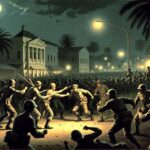
As the story progressed, reports became increasingly alarming. Radio announcers described strange cylinders crashing near the small town of Grovers Mill. Witnesses allegedly watched in horror as towering alien machines emerged from the wreckage, firing deadly heat rays and unleashing poisonous black smoke upon terrified crowds.
The realism of the broadcast was startling. Actors portrayed frantic eyewitnesses, scientists, military officials, and breathless reporters delivering updates in a style eerily similar to genuine emergency news coverage. For listeners who tuned in late and missed the introduction identifying the program as fiction, the illusion could feel convincing.
Almost immediately, stories began circulating of frightened citizens reacting as though the invasion were real. Some reportedly packed cars and fled cities. Others called newspapers, radio stations, and police departments seeking information. Churches held emergency prayers, while rumors spread wildly through neighborhoods.
Yet how widespread the panic truly was remains a matter of debate.
For decades, popular culture portrayed the event as nationwide hysteria affecting millions of terrified Americans. Newspapers at the time sensationalized reports, often emphasizing chaos and confusion. However, later historians and media researchers argued that the actual panic may have been exaggerated.
Audience ratings suggest the broadcast had fewer listeners than commonly assumed because many Americans were tuned into a popular comedy program featuring ventriloquist Edgar Bergen. Some scholars believe newspapers—then facing growing competition from radio—may have amplified stories of public gullibility to criticize the emerging medium.
Still, there is little doubt that many people were genuinely frightened. The timing of the broadcast likely contributed to its impact. In 1938, the world stood anxiously on the edge of war. News of political instability in Europe dominated headlines, and radio had become a trusted source for urgent information. Listeners were accustomed to genuine news interruptions, making the fictional bulletins feel disturbingly plausible.
Ironically, the broadcast transformed Orson Welles from a relatively unknown performer into a national celebrity almost overnight. Within a few years, he would direct the groundbreaking film Citizen Kane, widely regarded as one of cinema’s greatest achievements.
Today, the 1938 War of the Worlds broadcast stands as both a cultural milestone and a cautionary tale about media influence. It demonstrated how convincingly storytelling could blur the line between fiction and reality—especially when delivered through trusted channels.
More than eighty years later, the image still fascinates: families gathered around radios, hearing urgent voices warn of impossible horrors, and for one unforgettable night wondering if humanity’s greatest fear had finally arrived from the stars.
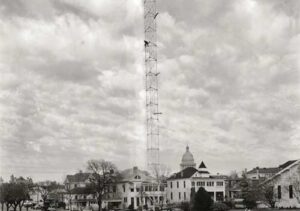
In the late nineteenth century, cities across the United States embraced a dazzling new…
In the autumn of 1869, laborers digging a well on a farm in upstate…
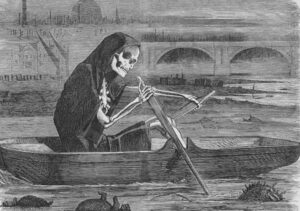
In the summer of 1858, the heart of the British Empire found itself overwhelmed…