Beneath the Dark Waters: The Legend of the Oklahoma Octopus Lake Monster
— July 10, 2026When people think of mysterious lake monsters, Scotland’s Loch Ness Monster usually comes to…

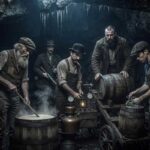
Deep in the hills of Appalachia, where winding trails disappeared into thick forests and lawmen were often viewed with suspicion, moonshiners spent generations perfecting the art of making illegal whiskey. Hidden stills, secret caves, and remote hollows became part of a shadow economy that flourished during Prohibition and long after. Among the many tales that emerged from this era, few are as dramatic as the legend of the Great Moonshine Cave-In.
According to local stories, a group of bootleggers operating an illicit distillery inside a remote cave met disaster when part of the cavern collapsed, trapping them underground alongside their precious stock of moonshine.
The exact location varies depending on who tells the story. Some place the incident in the mountains of eastern Tennessee, while others claim it occurred somewhere in Kentucky or western North Carolina. Like many pieces of Appalachian folklore, the details have become blurred over time. Yet the central tale remains remarkably consistent.
The bootleggers had chosen a cave because it offered several advantages. The underground chambers concealed smoke and light from curious eyes. Nearby streams supplied fresh water for distilling. Most importantly, the cave provided protection from federal agents constantly searching for illegal operations.
For months, perhaps even years, the hidden still reportedly operated without incident. Barrels of whiskey accumulated in the cool darkness, aging naturally in the stable underground temperatures. The moonshiners believed they had discovered the perfect hiding place.
Then came the collapse.
One version of the story says that heavy rains weakened the cave ceiling. Another claims the men had expanded chambers using black powder, unknowingly destabilizing the rock above them. Whatever the cause, tons of stone suddenly crashed down, sealing the primary entrance.
The trapped bootleggers found themselves cut off from the outside world. Their supplies were limited, and escape seemed impossible.
As word spread through nearby communities, a rescue effort reportedly began. Family members, friends, and sympathetic neighbors gathered with picks, shovels, and lanterns. Official authorities were said to be reluctant participants, partly because helping the trapped men would also expose an illegal distillery operation.
For days, rescuers chipped away at the rubble. Some accounts claim they could hear faint voices from behind the collapsed rock. Others tell of tapping sounds used to signal that survivors remained alive.
Eventually, according to the legend, rescuers broke through.
When people think of mysterious lake monsters, Scotland’s Loch Ness Monster usually comes to…
When people think of World War II, they usually picture Allied nations united against…
When most people think of military balloons used during World War II, Japan’s Fu-Go…