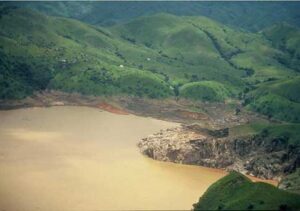
Death from the Deep: The Lake Nyos Killer Gas Cloud That Suffocated an Entire Valley
— July 14, 2026Some of history’s deadliest natural disasters have come without warning, leaving behind little visible…

During the sweltering summer of 1916, a series of deadly shark attacks along the New Jersey coast shocked the United States and forever changed the public’s perception of sharks. Before that fateful July, many experts believed sharks posed little danger to humans. Within just twelve terrifying days, however, five people were attacked, four lost their lives, and an atmosphere of panic swept through seaside communities. More than a century later, the Great Jersey Shore Shark Attacks remain one of the most infamous wildlife incidents in American history.
The first attack occurred on July 1, 1916, at Beach Haven, New Jersey. Twenty-five-year-old Charles Vansant was enjoying an evening swim when he was suddenly attacked by a large shark. Lifeguards and bystanders rushed into the surf and managed to pull him ashore, but he succumbed to severe blood loss shortly afterward.
Just five days later, another tragedy unfolded several miles north in Spring Lake. Charles Bruder, a young Swiss hotel employee, was swimming approximately 130 yards from shore when he was attacked in full view of horrified beachgoers. Rescue attempts were unsuccessful, and Bruder died before reaching land.
News of the attacks spread rapidly through newspapers across the country. Although many officials insisted the incidents were isolated, fear began to grip vacationers. Some beaches installed protective nets, while others increased lifeguard patrols in an effort to reassure the public.
The most shocking events, however, were still to come.
On July 12, the attacks moved inland to Matawan Creek, a tidal waterway located nearly 11 miles from the Atlantic Ocean. Many residents considered the creek perfectly safe for swimming, believing sharks would never venture so far upstream.
That assumption proved tragically wrong.
Eleven-year-old Lester Stillwell disappeared beneath the water after witnesses reported seeing him pulled under by what appeared to be a large shark. As townspeople searched for the boy, twenty-four-year-old Stanley Fisher entered the creek to help recover his body. Fisher was also attacked and suffered devastating injuries. He died later that day.
Just thirty minutes after the attack on Fisher, fourteen-year-old Joseph Dunn was attacked while swimming farther upstream. Remarkably, family members and friends managed to pull him away from the shark after a desperate struggle. Dunn survived, becoming the only victim to escape with his life.
The unprecedented attacks left the nation stunned. President Woodrow Wilson reportedly discussed the crisis with members of his Cabinet, and communities along the East Coast launched organized shark hunts. Fishermen captured and killed numerous sharks in hopes of ending the threat.
One of the most widely publicized captures occurred when taxidermist Michael Schleisser caught a large great white shark in Raritan Bay. Investigators reportedly discovered what were believed to be human remains in the shark’s stomach, leading many to conclude it was responsible for the attacks.
Even today, however, debate continues over the true identity of the predator.
Most marine biologists believe a great white shark was the likely culprit, citing its size and ability to inflict the devastating injuries described by witnesses. Others have suggested that a bull shark may have been responsible, particularly because bull sharks are well known for their ability to travel into freshwater rivers and estuaries, making the Matawan Creek attacks seem more plausible.
The 1916 attacks had a lasting impact far beyond New Jersey. They inspired new scientific research into shark behavior, influenced public attitudes toward ocean safety, and are widely believed to have inspired elements of Peter Benchley’s bestselling novel Jaws, which later became Steven Spielberg’s iconic 1975 film.
Today, millions of people safely enjoy the waters along the Jersey Shore every summer. Shark attacks remain extremely rare, and modern understanding of shark behavior has helped replace fear with education. Yet the extraordinary events of July 1916 continue to stand as one of the most chilling chapters in American coastal history, reminding us that even familiar waters can occasionally conceal unexpected dangers.
Some of history’s deadliest natural disasters have come without warning, leaving behind little visible…
Few criminal cases in British history are as bizarre as the Hammersmith Ghost Murder….
When people think of mysterious lake monsters, Scotland’s Loch Ness Monster usually comes to…