The Winchester Mystery House: The Endless Building Project That Became a Legend
— July 30, 2026In San Jose, California, stands one of the most unusual homes ever constructed: the…

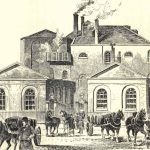
On the warm evening of 18 June 1875 residents of Dublin’s Liberties district heard an alarming sound. Flames crackled from a bonded warehouse on Chamber Street. What followed was no ordinary fire. Barrels of whiskey burst open and sent a blazing river six inches deep racing down the cobblestones. The liquid fuel turned gutters into streams of fire and drew crowds who saw opportunity instead of danger. By morning the neighborhood lay scorched and 13 people had died not from burns or smoke but from drinking the free flowing spirits.
The Liberties was then a crowded working class quarter packed with tanneries distilleries and tenements. Laurence Malone owned the warehouse at the corner of Ardee Street. It held roughly 5000 hogsheads more than 262000 imperial gallons of undiluted cask strength whiskey valued at 54000 pounds a fortune in Victorian times. Earlier that afternoon at 435 pm the storehouse had been inspected and declared safe. By 830 pm an alarm rang out. No one knows exactly how the blaze began but within hours it had spread to adjoining malt houses.
Heat swelled the wooden casks until they exploded like bombs. Flaming whiskey poured through doors and windows forming a burning torrent that flowed toward the Coombe area. Eyewitnesses compared it to lava. The river destroyed at least eight buildings and damaged dozens more. It killed several pigs that had been rooting in the streets and scorched the legs of horses struggling to pull fire engines. Firefighters from the city brigade arrived quickly but their hoses could do little against the alcohol fueled inferno. Some accounts say crews even used manure to help smother the flames a detail that later complicated the tragedy.
The real horror unfolded not in the flames but in the crowds that gathered. Word spread fast that whiskey was running free. Men women and even children rushed out with buckets hats boots and any vessel they could find. They dipped into the shallow river scooping up the warm liquor and drinking it on the spot. The whiskey was potent far stronger than the diluted drams sold in pubs and it had mixed with street filth sewage and possibly the manure used by firefighters. Still the temptation proved irresistible in a poor district where such bounty seemed miraculous.
By the next day the grim toll became clear. Thirteen people perished from acute alcohol poisoning. None died directly from the fire itself. Victims included locals who had simply wanted to celebrate their sudden luck. Hospitals filled with others suffering severe intoxication. Newspapers reported men collapsing in the streets and families carrying unconscious relatives home. The disaster shocked Dublin and highlighted the desperate conditions in the Liberties where poverty made even dangerous whiskey seem like a gift.
Property losses were substantial though exact figures vary. The fire gutted warehouses and homes and left families homeless. Insurance claims and public appeals followed. The event also exposed weaknesses in the city’s fire defenses. At the time Dublin relied on a patchwork of volunteer and municipal brigades. The whiskey blaze prompted calls for better equipment and training. Some historians mark it as a turning point that helped modernize the Dublin Fire Brigade in the years that followed.
In the wider context the Great Whiskey Fire fits a pattern of industrial accidents in 19th century cities. Bonded warehouses stored vast quantities of spirits without today’s safety standards. Similar fires had occurred elsewhere but none produced such a darkly comic twist. The story has endured in Irish folklore often retold with a mixture of horror and black humor. It serves as a cautionary tale about the double edged nature of alcohol both lifesaver and killer.
Today the Liberties has transformed into a vibrant cultural hub with craft distilleries and museums. Plaques and walking tours recall the night whiskey ran like fire through the streets. The 150th anniversary in 2025 brought renewed attention with exhibitions and lectures. Yet the core lesson remains unchanged. A single spark in the wrong place can turn abundance into catastrophe.
The Great Whiskey Fire stands as one of Dublin’s strangest tragedies. It claimed no lives in the blaze yet killed through the very liquid meant to bring cheer. In the end the streets ran with both fire and folly reminding everyone that fortune poured too freely can prove fatal.
In San Jose, California, stands one of the most unusual homes ever constructed: the…
Among the world’s strangest legends is the tale often called the “Corpse Bride” mummified…
To modern readers, the idea of children’s toys containing lead sounds shocking, yet for…