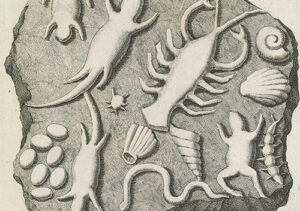
Carved in Stone, Written in Shame: The Tale of Beringer’s Lying Stones
— August 24, 2026In 1725, a respected physician and professor near the German city of Würzburg believed…

On a cold November evening in 1809, a young British diplomat named Benjamin Bathurst stepped outside a Prussian inn to inspect the horses that were about to carry him on the next leg of his journey home. He walked around to the far side of the carriage team, out of sight for only a moment. He was never seen again. No body was ever conclusively identified, no confession was ever made, and more than two centuries later, the disappearance of Benjamin Bathurst remains one of the most puzzling unsolved cases of the Napoleonic era.
Benjamin Bathurst was born in 1784, the third son of Henry Bathurst, the Bishop of Norwich. Rather than pursue the legal or political career his father had hoped for, Benjamin chose diplomacy, eventually rising to the position of Secretary of the British Legation at Livorno, in what was then the Grand Duchy of Tuscany. In 1805 he married Phillida Call, and the couple had three children together.
Early in 1809, Bathurst was sent on a sensitive mission to Vienna, tasked with strengthening ties between Britain and the Austrian Empire at the court of Emperor Francis, at a moment when much of continental Europe was engulfed in the Napoleonic Wars. It was extraordinarily dangerous work. Napoleon’s forces controlled or threatened large stretches of the continent, and any British official caught traveling through hostile or contested territory risked arrest, or worse, if his identity and purpose were discovered.
By November, with his mission complete, Bathurst needed to make his way back to Britain. Rather than risk a direct route through French-controlled territory, he chose to travel in disguise under the assumed name “Baron de Koch,” accompanied by a German courier. It was a precaution that reflected just how seriously diplomats of the era took the threat of interception.
On November 25, 1809, Bathurst and his companion arrived in the small Prussian town of Perleberg and checked into an inn called the White Swan. After an early dinner, Bathurst retired to a small side room, where witnesses later reported he spent several hours writing correspondence — and, oddly, burning some of what he had written in the room’s fireplace. Precisely what he wrote, and why he destroyed some of it, has never been explained.
Bathurst’s departure was delayed, and it wasn’t until around nine o’clock that evening that he was informed his fresh horses were harnessed and ready. He went outside to inspect them before setting off, in full view of his traveling companions. According to the accounts that followed, Bathurst walked around to the far side of the horses — and simply never reappeared on the other side. No cry was heard, no struggle was reported, and no one saw anything unusual happen. He had vanished within arm’s reach of the people traveling with him.
Bathurst’s disappearance triggered an immediate search of the inn and the surrounding area, but it turned up almost nothing of substance. When his wife Phillida later traveled to Germany to search for him herself, she offered a substantial reward for any information about his fate — a decision that, while understandable, backfired in a familiar way: it attracted a flood of unreliable tips and fabricated stories from people hoping to collect the money, muddying the investigation rather than clarifying it.
A few physical clues did eventually surface. Some accounts describe torn or bloodied clothing found near the inn or a short distance away, along with a pair of trousers reportedly discovered with a bullet hole in them, and a document bearing Bathurst’s name later found hidden in a nearby location. None of it, however, amounted to conclusive proof of what had actually happened to him, and his body was never definitively recovered.
In the emotionally charged atmosphere of the Napoleonic Wars, the most immediate and widely believed explanation in Britain and Germany alike was that Bathurst had been secretly captured and murdered on the orders of Napoleon himself, perhaps as retaliation for his diplomatic activities on Austria’s behalf. The theory was serious enough that Napoleon reportedly felt compelled to personally assure Bathurst’s wife, the following spring, that he had no knowledge of her husband’s fate — though such a denial, naturally, proved nothing either way.
Other theories emerged over the years, ranging from political assassination by secret societies opposed to Napoleon’s influence, to the far more mundane and, according to most modern historians, far more plausible explanation: that Bathurst was simply the victim of ordinary robbery and murder. Under this theory, he was killed for the value of his coat, his money, and whatever else he was carrying, by opportunistic local criminals who had no idea, or no concern for, his diplomatic status. Some investigators pointed to a member of a local family working as a servant at the White Swan as a possible suspect, though the evidence never rose to the level of a conviction or formal resolution.
Interestingly, modern historical review suggests that the case has become considerably more mysterious in popular retelling than the underlying facts actually support. Later writers and storytellers tended to embellish the disappearance, framing it almost as a supernatural event, a man who stepped behind a horse and vanished from the physical world entirely, rather than the more mundane, if still tragic and unresolved, likely reality of a violent crime in a chaotic wartime landscape with limited investigative resources. The case’s eerie framing proved irresistible to fiction writers; it directly inspired H. Beam Piper’s 1948 science fiction story “He Walked Around the Horses,” and versions of the tale have circulated for decades among collectors of unexplained mysteries, including the influential early twentieth-century writer Charles Fort, who was known for cataloguing unexplained phenomena.
More than two centuries later, no one has ever definitively established what happened to Benjamin Bathurst in the moments after he stepped around those horses outside the White Swan Inn. The most sober, evidence-based theories point toward a violent robbery gone fatally wrong rather than anything supernatural or even necessarily politically motivated. But without a body, a confession, or conclusive physical evidence, the case remains formally unsolved — a young diplomat who simply never came back around the other side, leaving behind a mystery that has outlived him by well over two hundred years.
In 1725, a respected physician and professor near the German city of Würzburg believed…
In the summer of 1971, headlines around the world announced something extraordinary: a genuine…
On Halloween night in 1926, a wealthy, eccentric Toronto lawyer named Charles Vance Millar…