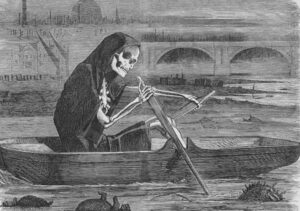
When London Could No Longer Hold Its Nose: The Great Stink of 1858
— July 15, 2026In the summer of 1858, the heart of the British Empire found itself overwhelmed…

In November 1932, the Australian Army suffered one of the most embarrassing defeats in military history—not against an invading army, but against a flock of flightless, six-foot-tall birds with a taste for wheat.
The trouble began after World War I. The government had promised returning soldiers fertile land in Western Australia’s Campion district. Veterans cleared scrub, planted wheat, and built farms. Then the emus arrived. Drought inland had driven as many as 20,000 of the giant birds westward in search of food. They trampled fences, devoured crops, and left farmers staring at ruined fields and empty granaries.
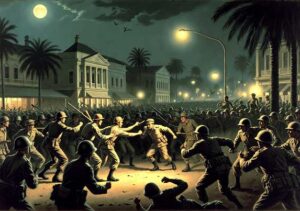
Desperate, the settlers petitioned the government. The reply was spectacular: the Minister for Defence, Sir George Pearce, authorized military intervention. On 2 November, Major G.P.W. Meredith and a small detachment from the 7th Heavy Battery rolled into the Wheatbelt armed with two Lewis machine guns and 10,000 rounds of ammunition. Their mission: cull the emus “by any means necessary.”
The first encounter should have been a slaughter. Hundreds of emus grazed openly near a dam. The soldiers opened fire. The birds simply scattered in every direction at speeds up to 50 km/h (31 mph). The Lewis guns jammed in the dust. When the smoke cleared, only a handful of emus lay dead. The rest had vanished into the scrub.
Over the next few days the pattern repeated with comic regularity. Emus refused to form neat targets. They split into small groups, ran in zig-zags, and seemed almost bulletproof—loose, shaggy feathers absorbed or deflected many rounds. One soldier later joked that the emus “could face machine-gun fire with the invulnerability of tanks.” By 8 November, after six days of fruitless combat, the troops had expended most of their ammunition and officially killed only 986 birds. The rest—thousands—remained defiant.
The press had a field day. Newspapers across Australia and even overseas ran headlines like “Emus Rout Army” and “Diggers Defeated by Birds.” Politicians in Canberra were mortified. Meredith’s force withdrew, only to return briefly in December for one final, slightly more successful sweep. By then the government had quietly abandoned the military solution. Instead, it offered farmers a bounty of two shillings and sixpence per emu head. The settlers, armed with shotguns and far more patience than machine gunners, eventually brought the population under control.
Today the “Great Emu War” is remembered with affection rather than shame. A small memorial now stands near the town of Nungarin, and the story has become part of Australian folklore—proof that even the best-laid plans can be undone by a determined bird. The emus, of course, never received an official surrender, but they kept the wheat fields anyway.
In the end, the only real casualties were military pride and a few thousand rounds of .303 ammunition. The emus won. Australia, with its legendary sense of humour, simply declared the whole affair a draw—and moved on.
In the summer of 1858, the heart of the British Empire found itself overwhelmed…
When people think of mysterious lake monsters, Scotland’s Loch Ness Monster usually comes to…
When people think of World War II, they usually picture Allied nations united against…