Chasing Bats with Brilliant Light: The Curious Story of the Great Moonlight Towers Experiment
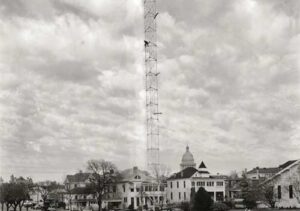
— July 21, 2026In the late nineteenth century, cities across the United States embraced a dazzling new…

In 1896, a Missouri-NKansas-Texas Railroad publicity gambit aimed to turn a humble railway campaign into a national headline. The plan was audacious: build a temporary town called Crush in central Texas, lure tens of thousands of spectators, and stage a spectacular head-on crash between two old locomotives to “sell more tickets” and spark curiosity about the Katy line. What could go right with a stunt designed to pull people from towns to a brand-new boom town? Everything—at first.
Crush, Texas, became a flashpoint of spectacle. In the weeks leading up to the event, advertisements flooded newspapers, handbills, and rail stations. Vendors lined the town with carnival attractions, food stalls, and makeshift shops, all feeding off the crowd drawn by the promise of a once-in-a-century collision. On September 15, 1896, some 40,000 people converged on the improvised village to witness the dramatic moment when two steam giants—Old No. 999 and Old No. 1001—hurtled toward each other on a specially laid track. The scene was a photographer’s dream and a marketer’s triumph in terms of attendance and publicity reach.
The intended arc of the day—a controlled, thrilling, unforgettable spectacle—collapsed in a blaze of boilers and emergency improvisation. The crash produced a catastrophic boiler explosion that sent shrapnel and debris into the crowd, injuring dozens and killing at least two spectators. The disaster did not spare the photographers, who found themselves in the crosshairs of flying debris and collapsing machinery. What began as a calculated pay-off for a struggling railroad company quickly devolved into chaos, with families fleeing, vendors scrambling, and public sentiment tipping from excitement to horror. In the aftermath, the railroad faced scrutiny, and the very monster it had invited—spectacle without safeguards—consumed its own momentum.
The “Crush” stunt would be remembered less for the sensational collision and more for its consequences. The company faced public backlash and internal questions about risk, responsibility, and the price of publicity. The crash didn’t just ruin the day’s profits; it tainted the image of public spectacles as we know them. Yet the story persisted in popular memory, amplified by later retellings in song, film, and local lore that framed Crush as a cautionary tale about showmanship run amok. The fascination endures because the event sits at the intersection of ambition, crowd psychology, and technical risk—the moment when marketing ambition collided with human reality.
Today, the Crash at Crush (as it’s often called) stands as a historic vignette about the power—and peril—of publicity stunts. It’s a reminder that audience excitement can be meteoric, but so can tragedy, when safety lags behind spectacle. The episode also underscores the enduring tension between business needs and public safety, a lesson that remains relevant for organizers of large-scale events and promotional campaigns.
In the late nineteenth century, cities across the United States embraced a dazzling new…
In the autumn of 1869, laborers digging a well on a farm in upstate…
In the summer of 1858, the heart of the British Empire found itself overwhelmed…