When London Could No Longer Hold Its Nose: The Great Stink of 1858
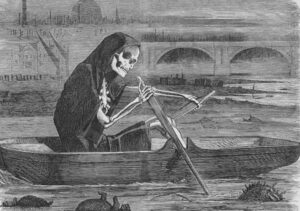
— July 15, 2026In the summer of 1858, the heart of the British Empire found itself overwhelmed…

In the winter of 532 AD, the mighty city of Constantinople—the heart of the Byzantine Empire—stood on the brink of total collapse. What began as a dispute among rival chariot racing factions erupted into one of the most destructive urban uprisings in ancient history: the Nika Riots.
At the center of the chaos was Emperor Justinian I, a ruler known for his ambition to restore the glory of the Roman Empire. But his reign had stirred deep resentment. Heavy taxation, political repression, and dissatisfaction with his administration created a volatile atmosphere in the city. The spark that ignited it all came from an unlikely source: the Hippodrome.
Chariot racing in Constantinople was more than entertainment—it was a passionate, almost tribal obsession. The two dominant factions, the Blues and the Greens, had vast followings and political influence. Their rivalries were intense, often spilling into street violence. When several members of both factions were arrested and sentenced to death after a riot, tensions reached a boiling point.
During a race at the Hippodrome, the crowd united in an unexpected way. Instead of cheering for their teams, both factions began shouting “Nika!”—meaning “Victory!”—in protest against the emperor. The unified cry quickly turned into open rebellion. What followed was days of destruction.
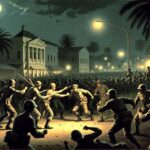
The rioters surged through Constantinople, setting fire to buildings and looting homes. Among the structures destroyed was the original Church of Hagia Sophia, one of the most important religious sites in the empire. The fires raged uncontrollably, and much of the city was reduced to smoldering ruins. At one point, the mob even declared a rival emperor, signaling a full-scale revolt.
Inside the imperial palace, Justinian faced a critical decision: flee or fight. According to historical accounts, he was prepared to abandon the city. It was his wife, Empress Theodora, who changed the course of history. In a now-famous speech, she urged him to stand firm, declaring that “royalty is a fine burial shroud.” Her resolve steeled Justinian’s nerves.
Determined to crush the uprising, Justinian devised a brutal plan. His generals lured the rioters into the Hippodrome under the pretense of negotiation. Once the crowd was gathered, imperial troops sealed the exits and attacked. What followed was a massacre. Historians estimate that as many as 30,000 people were killed in a single day.
The rebellion was over, but the city lay in ruins. Yet from the ashes, Justinian saw opportunity. He embarked on an ambitious rebuilding program, transforming Constantinople into a grander and more magnificent capital. The most enduring symbol of this renewal was the new Hagia Sophia, an architectural marvel that still stands today.
The Nika Riots remain a stark reminder of how quickly public discontent can spiral into catastrophe. For Justinian, it was a near-fatal challenge to his rule—but also a turning point that reshaped his empire and secured his legacy in history.
In the summer of 1858, the heart of the British Empire found itself overwhelmed…
Some of history’s deadliest natural disasters have come without warning, leaving behind little visible…
Few criminal cases in British history are as bizarre as the Hammersmith Ghost Murder….