Brazil’s Roswell: The Bizarre Varginha UFO Crash and Creature Encounter
— March 19, 2026In January 1996 the quiet Brazilian city of Varginha became the center of one…

In late January 1959, ten experienced hikers from the Ural Polytechnical Institute in Sverdlovsk (now Yekaterinburg), Russia, set out on a challenging Category III winter trek through the northern Ural Mountains. Led by 23-year-old Igor Dyatlov, the group aimed to reach Mount Otorten, covering roughly 215 miles in 16 days to earn the highest Soviet hiking certification. One member, Yuri Yudin, turned back early due to illness, unknowingly saving his life. The remaining nine—seven men and two women—pushed on.
On February 1, they pitched their tent on the eastern slope of Kholat Syakhl (“Mountain of the Dead” in the local Mansi language), about 10 miles from their goal. That night, in temperatures plummeting to −40°C (−40°F) with strong winds, something terrified them into fleeing. They slashed the tent open from the inside, abandoning skis, boots, warm clothing, and supplies, and fled downhill in socks or barefoot toward a distant forest.
Search parties launched after the group failed to report in found the tent on February 26, still largely intact but eerily empty. Over the following weeks, the bodies were recovered in stages. Six had died of hypothermia; the other three suffered severe trauma—crushed chests, a fractured skull—with no external wounds. One woman was missing her tongue and eyes (likely postmortem animal scavenging). Traces of radiation appeared on some clothing, and footprints suggested an orderly but panicked descent.
The Soviet investigation, closed in May 1959, cited an “overwhelming force” or “compelling natural force” the hikers could not overcome. The area was sealed for three years, fueling decades of speculation: military rocket tests, UFOs, Yeti attacks, infrasound panic, or even a secret weapons mishap.

Ïàëàòêà Äÿòëîâöåâ
Wild theories dominated popular culture, but modern science has offered a compelling, evidence-based explanation. In 2019, Russian authorities reopened the case and in 2020 concluded a slab avalanche—a cohesive layer of wind-packed snow sliding over a weaker base—forced the group out. Swiss researchers Johan Gaume and Alexander Puzrin supported this in a 2021 peer-reviewed study published in Communications Earth & Environment. Their modeling showed the hikers’ cut in the slope for tent placement, combined with heavy wind-drifted snow, could trigger a delayed, localized avalanche hours later. This explains the injuries (equivalent to a car crash at 20–30 mph) without leaving obvious avalanche debris, and why the experienced hikers fled rather than digging out.
Further expeditions in 2022 captured video of slab avalanches on the very slope, confirming the terrain’s potential under similar conditions.
While the avalanche theory accounts for most evidence and satisfies official inquiries, some relatives and researchers still question it, pointing to inconsistencies like the radiation or the absence of widespread snow slide signs. No survivors lived to tell the story, and Soviet secrecy at the height of the Cold War ensured the incident became legend.
Today, more than 65 years later, the Dyatlov Pass remains a symbol of nature’s unforgiving power—and humanity’s fascination with the unexplained. The hikers’ bravery and the mountain’s silence continue to draw adventurers and theorists alike, but the most rational answer points to a tragic, avoidable encounter with the raw forces of a winter storm on a remote Siberian slope.
In January 1996 the quiet Brazilian city of Varginha became the center of one…
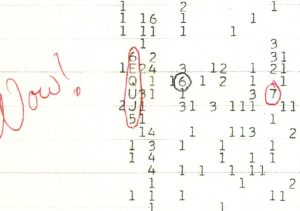
On the night of August 15 1977 a radio telescope at Ohio State University…
In January 1962, something extraordinary—and deeply unsettling—began at a small mission-run boarding school for…