The Dyatlov Pass Incident: One of History’s Enduring Mysteries
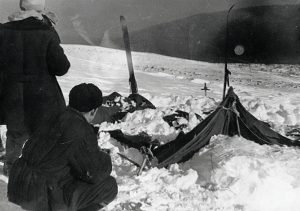
— March 4, 2026In late January 1959, ten experienced hikers from the Ural Polytechnical Institute in Sverdlovsk…

The hanging of “Murderous Mary” in 1916 remains one of the most unusual and controversial episodes in American entertainment history. The event took place in the small railroad town of Erwin and involved a circus elephant owned by Sparks World Famous Shows. The story has since become a powerful symbol in debates about animal welfare, public spectacle, and the treatment of performing animals in the early twentieth century.
Mary was a five-ton Asian elephant who had spent years traveling with the circus, performing in parades and shows across the southeastern United States. In September 1916, the circus arrived in Erwin for a scheduled performance. During a parade through town, Mary was being handled by a newly hired and reportedly inexperienced trainer, Walter Eldridge. Accounts vary, but it is generally believed that Eldridge used a bullhook improperly and struck or irritated the elephant. In response, Mary suddenly turned on him, lifting him with her trunk and fatally crushing him.
The shocking incident quickly spread panic among the onlookers. Public anger grew, fueled by sensational newspaper coverage that portrayed the elephant as dangerous and unpredictable. Local authorities and townspeople demanded that the animal be put to death. Circus owner Charlie Sparks faced enormous pressure. Concerned about safety, public opinion, and the future of his business, he agreed that Mary would be executed.
Several methods were considered, including shooting or electrocution, but ultimately the decision was made to hang the elephant. On September 13, 1916, thousands of spectators gathered at a rail yard in Erwin. A large industrial crane was used to lift Mary off the ground by a chain placed around her neck. The first attempt reportedly failed when the chain broke, causing the elephant to fall and suffer severe injuries. A second attempt succeeded, and Mary died shortly afterward.
At the time, the execution was viewed by many as necessary and justified. However, modern perspectives often interpret the event differently. Today, historians and animal welfare advocates emphasize the likely role of poor training, harsh treatment, and stressful circus conditions in the tragedy. Mary herself is frequently seen less as a “murderous” creature and more as a victim of human misunderstanding and exploitation.
The hanging of Murderous Mary stands as a stark reminder of changing attitudes toward animals. What was once considered public justice is now widely regarded as cruelty. The incident continues to be studied as a historical turning point, reflecting how society’s views on animal rights and ethical treatment have evolved over the past century.
In late January 1959, ten experienced hikers from the Ural Polytechnical Institute in Sverdlovsk…
In the isolated woods of rural Bavaria, just 70 kilometers north of Munich, a…
On January 15, 1919, the North End of Boston—a vibrant immigrant neighborhood near the…