Drunken Raccoon Raids Virginia Liquor Store, Passes Out in Bathroom After Boozy Rampage
— March 20, 2026It started like any other quiet night at the Ashland ABC Store, one of…

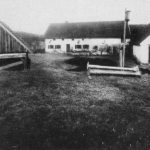
In the isolated woods of rural Bavaria, just 70 kilometers north of Munich, a modest farmstead called Hinterkaifeck stood as a symbol of hardscrabble German life in the early 1920s. Built around 1863, it was home to the Gruber family: stern patriarch Andreas (63), his wife Cäzilia (72), their widowed daughter Viktoria Gabriel (35), and her young children—Cäzilia (7) and Josef (2). On March 31, 1922, this peaceful enclave transformed into the scene of one of history’s most baffling mass murders. Six people were slaughtered in cold blood, and the case remains unsolved over a century later.
The family was no stranger to scandal. Andreas Gruber had a reputation as a bully, and whispers of incest with Viktoria circulated in the village—rumors fueled by Josef’s uncertain paternity. Viktoria’s husband, Karl Gabriel, had died in World War I, leaving her vulnerable. The farm’s remoteness added to its aura of unease; the previous maid had fled, terrified by “haunted” footsteps in the attic.

In the weeks before the killings, oddities mounted. Footsteps echoed overhead. Newspapers vanished, and keys went missing. The Grubers dismissed it as rats or wind. Little did they know, someone was watching—possibly living in the attic, as later evidence suggested.
That fateful Friday evening, the killer struck with chilling precision. Using a mattock—a heavy pickaxe-like tool from the barn—the assailant lured victims one by one. Andreas and Cäzilia were bludgeoned in the barn, followed by Viktoria and young Cäzilia. Their bodies were dragged, stacked like cordwood, and covered with hay and a board. Maria Baumgartner, arriving that afternoon for her first day as maid, was slain in her quarters. Finally, toddler Josef was killed in his crib with a single crushing blow to the face.
But the horror didn’t end there. The murderer lingered for days. Neighbors spotted smoke curling from

the chimney over the weekend. Cattle were fed, meals prepared from the pantry, and even the radio tuned. It was as if the killer had made the farm their own—a macabre squatter reveling in the aftermath.
The grim discovery came on April 4. Worried locals, noting the children’s absence from school and no market visits, broke in. The barn’s stench revealed the stacked corpses; the house held Maria and Josef. Autopsies confirmed the mattock as the weapon, found later in the loft—its handle snapped from the fury of the blows.
Police swarmed, but the investigation was a shambles. Fingerprints were overlooked, the scene trampled. Over 100 suspects emerged: vagrants, escaped POWs, even family. Lorenz Schlittenbauer, Viktoria’s neighbor and alleged lover (and possible father of Josef), topped the list—he’d quarreled with Andreas and led the search party. Others eyed drifters or a vengeful suitor. In 2007, a police academy cold-case review favored an insider but yielded no proof.
Theories abound: a family feud to silence incest, a serial killer like Paul Mueller (linked to U.S. axe murders), or a WWI deserter. The farm was razed in the 1930s, but a roadside shrine endures, inscribed with the victims’ names.
Hinterkaifeck endures as Germany’s ultimate unsolved enigma—a testament to rural isolation, human depravity, and the limits of justice. In the quiet Bavarian hills, its ghosts still whisper: Who was the monster in the attic?
It started like any other quiet night at the Ashland ABC Store, one of…
In January 1996 the quiet Brazilian city of Varginha became the center of one…
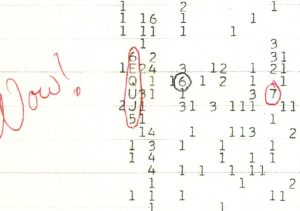
On the night of August 15 1977 a radio telescope at Ohio State University…