Terror in the Surf: The Great Jersey Shore Shark Attacks of 1916
— July 2, 2026During the sweltering summer of 1916, a series of deadly shark attacks along the…

Few American ghost stories are as unusual or as well documented as the legend of the Greenbrier Ghost. Set in the rolling hills of West Virginia in the late 1800s, the tale is unique because it is the only known case in American legal history in which testimony involving a ghost reportedly played a role in securing a murder conviction. Whether viewed as a supernatural event or a remarkable example of persistence and intuition, the story continues to fascinate historians and paranormal enthusiasts alike.
The events began in January 1897 with the death of twenty-three-year-old Elva Zona Heaster Shue. Zona had married Erasmus “Edward” Shue only a few months earlier, and the young couple lived near the small community of Livesay’s Mill in Greenbrier County.
When a local boy arrived at the Shue home to run an errand, he found Zona lying lifeless at the foot of the stairs. Edward Shue quickly took charge of the situation, cradling his wife’s body and refusing to let anyone examine it closely. Witnesses later recalled that he appeared unusually protective of her neck and head, wrapping a scarf around her throat before visitors arrived.
The local physician initially listed the cause of death as “everlasting faint,” later changing it to complications from childbirth, despite little evidence supporting either conclusion. With no obvious signs of foul play noted during the hurried examination, Zona was buried.
Her mother, Mary Jane Heaster, refused to believe her daughter’s death had been natural. According to her later account, she prayed fervently for answers. Over the course of four consecutive nights, she claimed that Zona’s ghost appeared in her bedroom.
The apparition allegedly described how Edward had become enraged during an argument over dinner and violently attacked her. The ghost demonstrated that her neck had been broken, reportedly turning her head completely around to prove the fatal injury.
Convinced that the visions were genuine, Mary Jane approached the county prosecutor and insisted her daughter had been murdered.
Although skeptical, the prosecutor agreed to reopen the investigation. Zona’s body was exhumed, and a thorough autopsy was performed. Physicians discovered that her neck had indeed been broken. The first vertebra had been fractured, and her windpipe showed signs of severe compression, findings consistent with strangulation.
Edward Shue was immediately arrested.
As investigators looked more closely into his past, they uncovered troubling information. He had been married twice before. One marriage had ended in divorce, while another wife had died under suspicious circumstances. The growing evidence strengthened the prosecution’s case.
During the 1897 trial, the defense made a strategic mistake by aggressively questioning Mary Jane Heaster about her reasons for suspecting Edward. Rather than avoiding the subject, the defense opened the door for her to recount the ghostly visits in detail before the jury.
The judge did not instruct the jury to accept the ghost story as evidence, nor was the apparition itself considered legal proof. Instead, the testimony was allowed because it explained why Mary Jane had become so persistent in requesting a new investigation. Many observers later believed the dramatic account damaged Edward’s credibility while reinforcing the determination of Zona’s mother.
After considering the medical evidence and witness testimony, the jury found Edward Shue guilty of murder. He was sentenced to life in prison, where he died several years later.
To this day, historians debate how much influence the ghost story actually had on the verdict. Most legal scholars believe the conviction rested primarily on the autopsy findings and the physical evidence rather than the supernatural claims. Nevertheless, the ghostly testimony became inseparable from the case in the public imagination.
Today, the Greenbrier Ghost remains one of America’s most famous paranormal legends. A historical marker stands near the site, commemorating the extraordinary case that blended folklore, justice, and true crime into a story unlike any other. Whether one believes in ghosts or not, the Greenbrier Ghost continues to captivate audiences as a rare instance where a tale from beyond the grave became part of courtroom history.
During the sweltering summer of 1916, a series of deadly shark attacks along the…
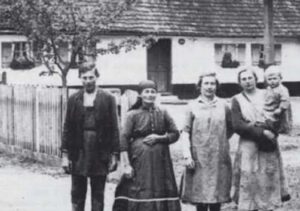
Among the world’s greatest unsolved crimes, few are as chilling as the Hinterkaifeck murders….
In 1971, two young boys playing in the garden of a house in the…