Justice from Beyond the Grave: The Mystery of the Greenbrier Ghost Testimony
— July 6, 2026Few American ghost stories are as unusual or as well documented as the legend…

Perched above a wooded ravine near Dumbarton, the elegant Victorian estate of Overtoun House is known for its sweeping lawns and quiet grandeur. Yet just beyond the house lies a place that has inspired decades of unease: the nearby Overtoun Bridge. Often referred to—somewhat sensationally—as the “dog suicide bridge,” it has been the subject of countless stories, speculation, and attempts at explanation.
The reports that fueled the legend began to circulate more widely in the mid-20th century. Visitors and locals alike described a disturbing pattern: dogs, particularly long-nosed breeds such as collies and retrievers, would suddenly leap from the bridge’s high stone walls into the rocky gorge below. In many cases, the animals appeared calm beforehand, showing no obvious signs of distress or agitation. The incidents seemed to occur from the same section of the bridge, typically on clear days, adding to the eerie consistency of the accounts.
It didn’t take long for more dramatic interpretations to emerge. Some claimed the area around Overtoun House was haunted, pointing to the region’s long history and the mansion’s imposing presence. Others suggested that unseen forces or spiritual energies might be influencing animal behavior. The idea of a “cursed” bridge quickly took hold in popular imagination, reinforced by media coverage that emphasized the strangeness of the events.
However, more grounded explanations have also been proposed. Animal behaviorists have suggested that scent may play a key role. The gorge beneath the bridge is home to wildlife, including small mammals that produce strong, musky odors. To a dog, these scents could be intensely stimulating—enough to trigger a sudden leap in pursuit. From the bridge’s vantage point, the drop is not immediately obvious, especially to an animal relying more on smell than sight. The structure’s high parapet walls can obscure the view of the steep descent, potentially creating a dangerous illusion.
Environmental factors may contribute as well. The combination of wind currents, echoing sounds, and the layout of the bridge could disorient animals, particularly those already excited by scent. What appears to human observers as inexplicable behavior may, in fact, be a tragic interaction between instinct and landscape.
Despite these explanations, the bridge’s reputation persists. Warning signs have been placed to alert visitors, and dog owners are encouraged to keep pets on a leash when crossing. The story has become part of local folklore, drawing curious travelers and paranormal enthusiasts alike. For some, the bridge represents an unsolved mystery; for others, it is a reminder of how easily natural phenomena can be misunderstood.
Today, Overtoun Bridge stands much as it has for over a century—quiet, picturesque, and steeped in story. Whether viewed through the lens of science or superstition, the events associated with it continue to provoke questions about perception, instinct, and the narratives we build to make sense of the unknown.
In the end, the so-called “dog suicide bridge” is less about intent and more about interpretation—a place where tragedy, environment, and imagination intersect, leaving behind a tale that lingers as stubbornly as the mist over the Scottish hills.
Few American ghost stories are as unusual or as well documented as the legend…
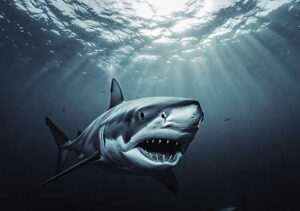
During the sweltering summer of 1916, a series of deadly shark attacks along the…
What if hundreds of years of recorded history never actually happened? Imagine waking up…