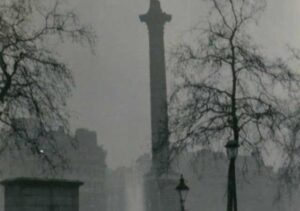
The Great Smog of London Chokes the City in 1952
— July 24, 2026In early December 1952, London was gripped by one of the most severe air…

Deep beneath the bustling streets of London lurks a modern menace that sounds more like something from a science-fiction movie than a real-world problem. These underground monsters are known as “fatbergs,” enormous masses of congealed grease, waste, and debris that clog the city’s sewer system. Some have grown so large that they have been compared to whales, buses, or even small buildings.
While the name may sound amusing, fatbergs have become a serious and costly problem for cities around the world.
A fatberg forms when fats, oils, and grease are poured down sinks and drains. Although these substances may appear liquid when warm, they cool and solidify inside sewer pipes. Over time, they combine with other materials flushed into the system, particularly wet wipes, paper products, and various forms of trash.
The result is a dense, rock-like mass that can grow to astonishing proportions.
London became famous for fatbergs in the early 2010s when utility workers began discovering increasingly massive blockages beneath the city. One of the most notorious examples was found in 2017 beneath Whitechapel, an area of East London. The giant obstruction stretched more than 800 feet and weighed an estimated 130 tons. Workers compared its size to that of a blue whale.
Removing it was no easy task.
Crews spent weeks breaking apart the enormous mass using high-pressure water jets and specialized equipment. The work was physically demanding, unpleasant, and time-consuming. Portions of the fatberg had become so solid that workers reportedly had to chip away at it much like miners cutting through rock.
The discovery captured worldwide attention. Newspapers, television programs, and social media users were fascinated by the bizarre underground phenomenon. What had once been an obscure plumbing issue suddenly became a global curiosity.
Scientists and engineers studying fatbergs discovered that modern consumer habits played a major role in their formation. One of the biggest contributors turned out to be so-called “flushable” wet wipes. Although many products were marketed as safe to flush, they often failed to break down like traditional toilet paper. Instead, they became entangled within grease deposits, helping create the massive blockages.
The consequences can be expensive.
When fatbergs obstruct sewer systems, they can cause wastewater to back up into homes, businesses, and streets. Utility companies spend millions of dollars annually clearing blockages and repairing damaged infrastructure. In severe cases, sewer overflows can create environmental hazards by releasing untreated waste into rivers and waterways.
London’s battle against fatbergs has inspired public awareness campaigns encouraging residents to change their disposal habits. Authorities frequently remind people to avoid pouring cooking grease down drains and to place wipes, paper towels, and other non-biodegradable materials in trash bins rather than toilets.
Interestingly, some fatbergs have become museum exhibits. Portions of the famous Whitechapel fatberg were preserved and displayed at the Museum of London, allowing curious visitors to see a piece of the infamous sewer obstruction up close. While few would call it beautiful, the exhibit served as a powerful reminder of how everyday actions can create unexpected consequences.
Today, fatbergs continue to challenge cities worldwide. From London to New York and Melbourne, sewer systems face similar threats from grease and improperly discarded waste.
The story of London’s giant fatbergs is both fascinating and cautionary. What begins as a little cooking oil poured down a kitchen sink or a single wet wipe flushed down a toilet can eventually contribute to a subterranean monster weighing hundreds of tons. Hidden beneath the city streets, these modern-day beasts remind us that even the most ordinary habits can have surprisingly large consequences.
In early December 1952, London was gripped by one of the most severe air…
In the late nineteenth century, cities across the United States embraced a dazzling new…
In the autumn of 1869, laborers digging a well on a farm in upstate…