Chasing Bats with Brilliant Light: The Curious Story of the Great Moonlight Towers Experiment
— July 21, 2026In the late nineteenth century, cities across the United States embraced a dazzling new…

In early December 1952, London was gripped by one of the most severe air pollution disasters in modern history. For five days, from Friday 5 December to Tuesday 9 December, a thick, toxic mixture of fog and smoke settled over the capital, turning day into night and claiming thousands of lives. Known as the Great Smog, the event exposed the deadly consequences of unchecked coal burning and forced a long-overdue reckoning with air quality in Britain’s largest city.
The conditions that produced the catastrophe combined cold weather, stagnant air, and heavy pollution. An unusually cold spell had already settled over the region, prompting Londoners to burn large quantities of coal in domestic fireplaces to stay warm. Much of the coal available after the Second World War was of lower quality and high in sulphur. Power stations, factories, and vehicles added further emissions of smoke, soot, and sulphur dioxide. On 4 December an anticyclone, a high-pressure weather system, settled over London. It created a temperature inversion in which a layer of warmer air trapped cooler, polluted air near the ground. With almost no wind to disperse the mixture, the smoke and fog accumulated into a dense, yellowish-black blanket that hung over the city.
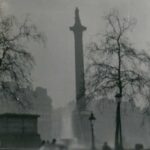
Visibility dropped dramatically. In some places people could see only a few feet ahead. Traffic ground to a halt as drivers abandoned vehicles or crawled along guided by flares and torches. Trains ran late or were cancelled. Outdoor sporting events were called off. Theatres and cinemas stayed open but patrons struggled to find their seats in the gloom that seeped indoors. The smog even penetrated hospital wards. Cattle at Smithfield Market reportedly died from breathing the foul air. For ordinary Londoners the experience was disorienting and frightening. Street lamps glowed weakly if at all, and the familiar sounds of the city were muffled by the thick atmosphere.
The human cost became clear only after the fog lifted. Official figures at the time put the death toll at around 4,000 during the five days and the immediate aftermath. Later research raised that estimate significantly, suggesting between 10,000 and 12,000 people ultimately died from the effects of the smog, many from respiratory and heart conditions aggravated by the pollution. Roughly 100,000 more suffered serious illness. The very young, the elderly, and those already struggling with bronchitis, pneumonia, or other lung problems were hit hardest. Death rates in London climbed to levels not seen since the influenza pandemic of 1918–1919.
At first the government treated the episode largely as an extreme weather event rather than a preventable pollution disaster. Public pressure mounted as the scale of the suffering became known. Newspapers and citizens demanded action. In response, a committee under Sir Hugh Beaver investigated the causes and recommended controls on smoke emissions. Those recommendations formed the basis of the Clean Air Act of 1956.
The Act marked a turning point. It empowered local authorities to create smoke-control zones where the burning of certain fuels was restricted or banned. Households received grants to convert from traditional coal fires to cleaner alternatives such as smokeless fuels, oil, gas, or electricity. Industrial emissions of smoke, grit, and dust faced tighter regulation. Progress was gradual, and another serious smog episode occurred in 1962, but the legislation began the long process of clearing London’s skies. Over the following decades coal use for domestic heating declined sharply, and the classic “pea-souper” fogs that had long defined the capital became far less common.
The Great Smog of 1952 stands as a stark reminder of the link between everyday energy use and public health. It showed that industrial and domestic pollution, when trapped by the weather, could turn a familiar city into a lethal environment within hours. The disaster also demonstrated that determined public policy could produce lasting change. The Clean Air Act and subsequent measures improved air quality across Britain and helped establish the principle that governments have a responsibility to protect citizens from the harmful effects of pollution. More than seven decades later, the events of those five December days in 1952 continue to inform debates about urban air quality, climate, and the true cost of the fuels that power modern life.
In the late nineteenth century, cities across the United States embraced a dazzling new…
In the autumn of 1869, laborers digging a well on a farm in upstate…
In the summer of 1858, the heart of the British Empire found itself overwhelmed…