The Dyatlov Pass Incident: One of History’s Enduring Mysteries
— March 4, 2026In late January 1959, ten experienced hikers from the Ural Polytechnical Institute in Sverdlovsk…

On January 15, 1919, the North End of Boston—a vibrant immigrant neighborhood near the waterfront—became the site of one of history’s most bizarre disasters. Shortly after noon, a massive storage tank burst, unleashing a tsunami not of water, but of 2.3 million gallons of molasses. The “Great Molasses Flood” (or Boston Molasses Disaster) claimed 21 lives, injured 150 more, and forever altered the city’s industrial landscape.
The tank belonged to the Purity Distilling Company, a subsidiary of United States Industrial Alcohol (USIA). Standing 50 feet tall and 90 feet wide, it held molasses imported from the Caribbean and fermented into industrial alcohol for World War I munitions and, increasingly, liquor as Prohibition loomed. Built hastily in 1915 to meet wartime demand, the structure was fatally flawed. Its steel walls were too thin and brittle (lacking sufficient manganese), rivets were defective, and it had leaked and groaned from day one. Workers painted it brown to hide the drips; safety tests were minimal or ignored.
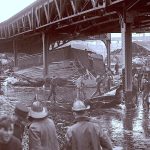
That mild winter day, temperatures climbed above 40°F after a freeze. Warmer molasses added the day before mixed with colder contents, causing thermal expansion and fermentation gases to spike internal pressure. Around 12:30 p.m., a thunderous roar erupted as rivets shot out like gunfire. The tank’s base failed, releasing a 15- to 40-foot-high wave that raced through the streets at 35 mph.

Denser than water and behaving like a non-Newtonian fluid avalanche, the molasses crushed buildings, including homes and Firehouse 31 (where firefighters were playing cards), buckled the elevated railway, and hurled debris—including trucks—into the harbor. Victims were crushed by wreckage or suffocated in the sticky flood; as the syrup cooled and thickened in the winter air, it trapped people and animals “like flies on flypaper.” Among the dead were laborers, teamsters, and children such as 10-year-old Maria Di Stasio and Pasquale Iantosca. Heroic rescuers—police, firefighters, Red Cross workers, and U.S. Navy cadets from the USS Nantucket—waded through the hardening goo for days to free survivors and recover bodies (one found in the harbor months later).
Cleanup took weeks, with crews pumping seawater and spreading sand. The harbor stayed brown into summer, and for decades residents swore the North End smelled of molasses on hot days—a detail that entered local folklore.
A class-action lawsuit followed. USIA blamed anarchists amid the Red Scare, but after three years of testimony, a court auditor ruled the company negligent in design, construction, and oversight. USIA paid about $628,000 in damages (roughly $11.7 million today).
The tragedy spurred lasting change: stricter building codes, mandatory professional engineer licensing, and greater oversight of industrial infrastructure nationwide. Today, the former tank site is Langone Park. A modest green plaque there quietly honors the victims and notes the structural defects that caused the disaster.
The Great Boston Molasses Flood stands as a cautionary tale of industrial hubris. What should have been a sweet commodity became a deadly reminder that safety cannot be sacrificed for speed or profit.
In late January 1959, ten experienced hikers from the Ural Polytechnical Institute in Sverdlovsk…
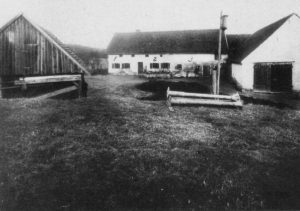
In the isolated woods of rural Bavaria, just 70 kilometers north of Munich, a…
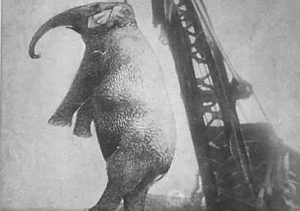
The hanging of “Murderous Mary” in 1916 remains one of the most unusual and…